Infection prevention
HOSPITAL HYGIENE: Infection prevention
Basic hygiene precautions: what can you do?
Germs (or microbes) live all around us, inside us and on us, so they are naturally everywhere. Many germs are harmless and good for our health; unfortunately, some can be harmful to our health.
In the specific context of a hospital, we must do everything we can to prevent the spread of potentially dangerous germs!
Everyone has a responsibility to do everything possible to prevent the spread of germs within the hospital: healthcare staff, patients, family, visitors and friends all have a role to play.
And it starts with clean hands!
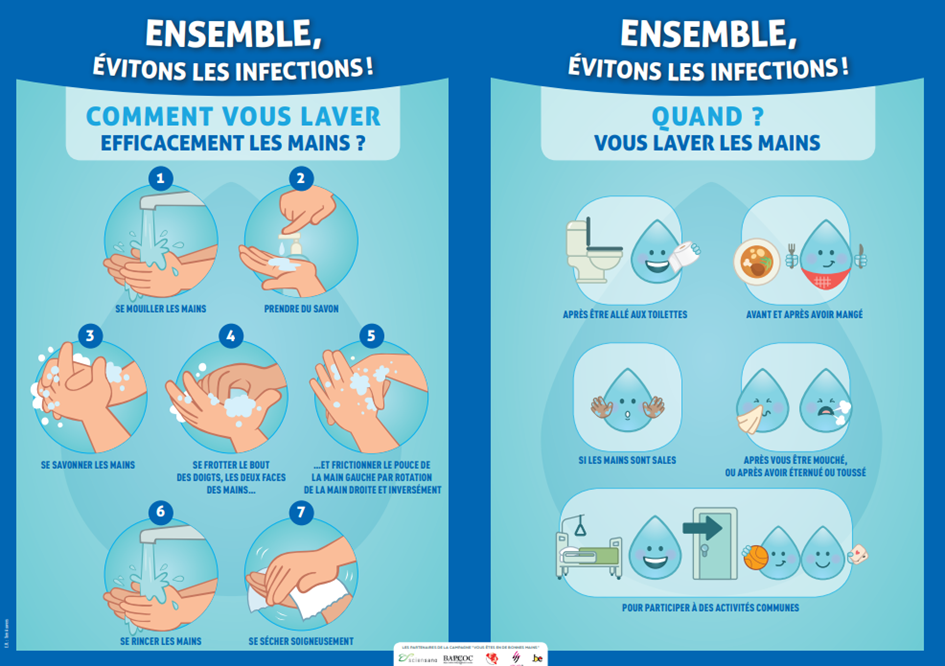
HAND HYGIENE IS THE MAIN WAY TO PREVENT THE SPREAD OF GERMS IN HEALTHCARE SETTINGS, IN THE COMMUNITY AND AT HOME.
In particular:
- after using the toilet
- before eating
- after coughing, sneezing or blowing your nose
- before taking a pill, using eye drops, using an inhaler, etc.
- before entering or leaving your room
For visitors:
- when they arrive for a visit
- before helping you eat
- before helping you with your care and after care
- when they leave your room
Basic hygiene precautions: what else can you do?
COUGH ETIQUETTE
Turn your head away from people when you need to cough or sneeze. The best way is to cough or sneeze into your sleeve. This will prevent bacteria from getting onto your hands. You can also use a tissue, but throw it away immediately after use, and don’t forget to sanitise your hands afterwards.
If you have a cold, you can infect others through droplets of saliva when speaking or coughing. Practise proper coughing etiquette and, to protect others, you can also wear a face mask. Please feel free to ask our staff for one.
TOILET HYGIENE
Always close the toilet seat when flushing. This prevents bacteria from the toilet water from spreading (via aerosols).
! Visitors are not permitted to use the toilet in your room.
